Can Scientists Identify Individual Humpback Whales by Their Voices?
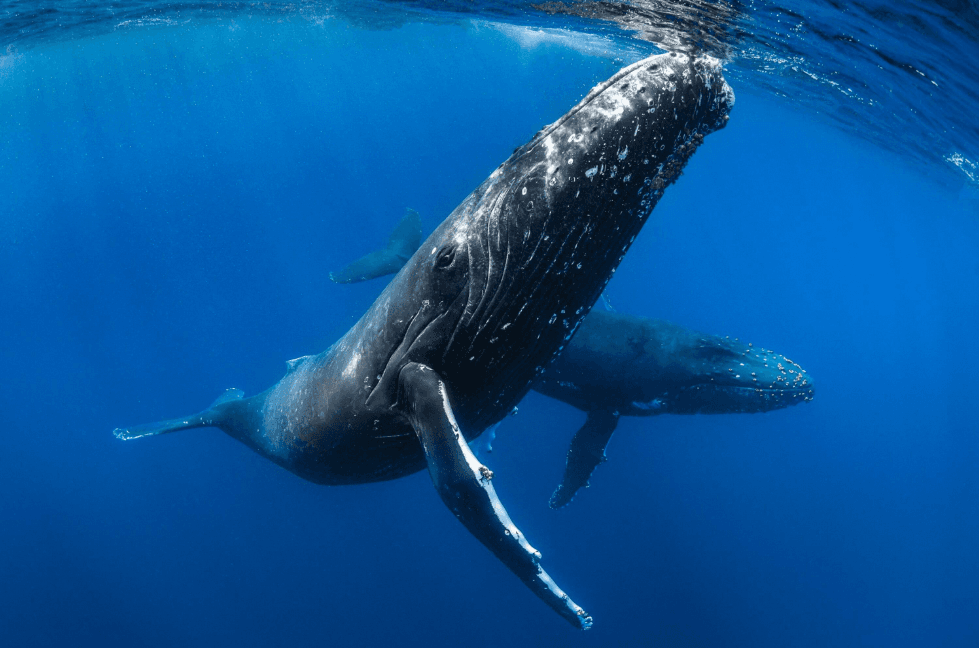
Humpback whales are famous for their complex songs, which can travel through the underwater environment and be heard by other whales over considerable distances. These sounds help researchers study whale communication, seasonal behavior, and the acoustic activity of marine habitats.
But an intriguing question remains: can scientists listen to a recording and determine exactly which humpback whale produced it?
The answer is more complicated than simply recognizing a familiar sound. Researchers can analyze differences in whale vocalizations, compare recordings made at different times, and sometimes associate sounds with whales whose identities are already known. However, identifying an individual humpback whale from its voice alone is not always possible.
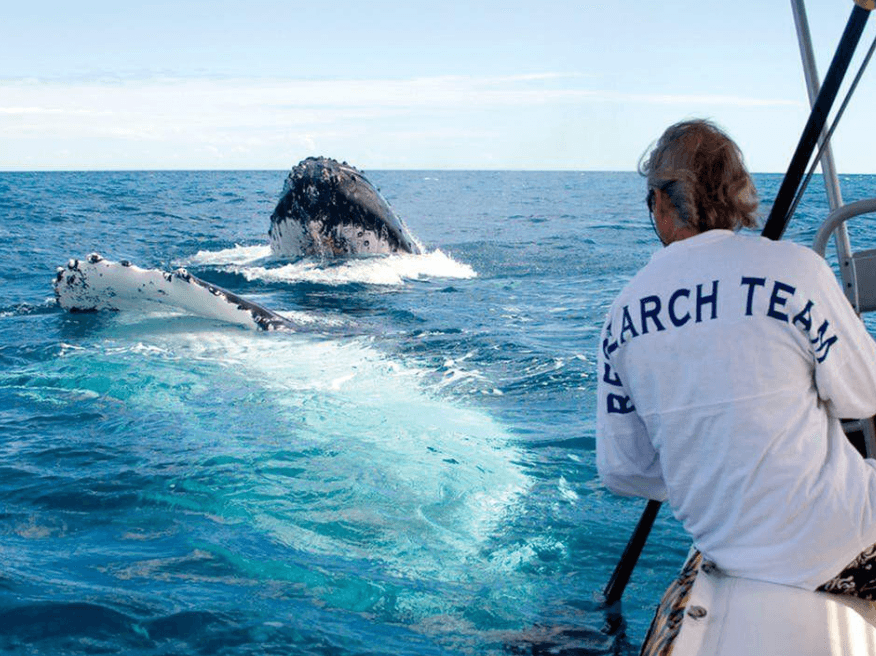
For visitors interested in Samaná whale watching in the Dominican Republic, this subject offers another way to appreciate the science behind humpback whale research. A whale seen at the surface may be identifiable through photographs, while its underwater vocalizations provide a different type of information about its behavior and acoustic environment.
Why Identifying an Individual Whale Is Challenging
Humpback whales produce a variety of sounds, including structured songs and shorter vocalizations. Some sounds contain repeated patterns, while others consist of brief calls that vary in pitch, duration, and structure.
These vocalizations are useful for scientific study, but they do not function like human names. A particular sound cannot automatically be assigned to one whale simply because researchers have heard something similar before.
Several factors make individual identification difficult.
First, humpback whales can produce different sounds in different behavioral situations. A whale may sing an extended sequence, produce shorter calls, or remain silent for a period of time.
Second, many whales share elements of their songs. In some breeding populations, males produce similar song patterns, and those patterns can change over time. A shared song feature therefore does not necessarily reveal an individual identity.
Third, underwater recordings may contain sounds from several whales at once. Without additional information, researchers may not know which animal produced a particular vocalization.
These challenges mean that scientists must distinguish between recognizing a sound pattern and identifying the animal responsible for it.
What Makes a Whale's Voice Scientifically Interesting?
Scientists study whale sounds by examining their acoustic characteristics. A recording can be represented as a waveform, which shows how sound amplitude changes over time, or as a spectrogram, which shows how sound energy is distributed across frequencies.
Researchers may examine several features:
- Pitch and frequency: The frequencies present in a vocalization and how they change over time.
- Duration: How long a sound or sound sequence lasts.
- Timing: The intervals between calls or repeated elements.
- Acoustic shape: The way a sound's frequency pattern rises, falls, or remains relatively stable.
- Repetition and variation: How similar sounds are produced across repeated recordings.
These characteristics help researchers compare vocalizations systematically instead of relying only on human listening.
However, a difference in a recording does not automatically indicate a different whale. The same individual may produce different sounds, and different individuals may produce similar ones. Recording distance, background noise, and the position of a whale relative to a hydrophone can also influence the sound that researchers capture.
For this reason, acoustic measurements are evidence to evaluate rather than definitive identity labels.
Can Every Humpback Whale Have a Unique Voice?
It is tempting to imagine that every humpback whale has a unique vocal signature, much like a human voice. In practice, the evidence is more nuanced.
Individual whales can differ in their vocal behavior, and some calls may contain characteristics that help researchers distinguish among recorded animals under suitable conditions. Nevertheless, humpback whale songs are also shaped by shared communication patterns, learning, social interactions, and changes over time.
A song pattern heard from one whale may also be produced by another whale in the same population. In addition, an individual may alter its vocal output during different activities or across different periods.
Therefore, scientists should not assume that every humpback whale has a permanently unique acoustic fingerprint that can be recognized in any recording.
To establish whether a vocalization is useful for identifying individuals, researchers need repeated observations and independent evidence connecting the sounds to known whales. A pattern that distinguishes two whales in one small dataset may not work reliably in a different season or population.
How Scientists Compare Whale Vocalizations
When researchers want to investigate possible individual differences, they begin by organizing and comparing recordings.
1. Collect recordings under suitable conditions
Scientists can use hydrophones to record underwater sounds in areas where humpback whales are present. The quality and usefulness of these recordings depend on factors such as equipment, background noise, water conditions, and the presence of other vocalizing animals.
Researchers also document the time and location of recordings whenever possible. These details help establish the context in which a sound was produced.
2. Select comparable vocalizations
Comparisons are more meaningful when researchers examine similar types of sounds. For example, comparing a particular call type across several recordings may be more useful for investigating individual variation than comparing unrelated sounds produced in different situations.
Researchers must also account for uncertainty when a recording contains overlapping vocalizations or when the sound source is not known.
3. Measure acoustic features
Researchers can measure frequency patterns, sound duration, timing, and other characteristics. They may use computer-assisted analysis to find similarities and differences that are difficult to assess consistently by listening alone.
Automated tools can help organize large datasets, but a computer-generated match is not automatically proof that two recordings came from the same whale.
4. Compare recordings from known individuals
The strongest evidence for individual-level identification comes from recordings that can be connected to whales whose identities have been established independently.
For example, researchers may observe a whale at the surface, record its sounds under conditions that support a reliable association, and then compare those recordings with later observations. The strength of the conclusion depends on how confidently the vocalization was attributed to that whale and whether the identification method has been tested.
5. Test whether the pattern remains reliable
Researchers need to determine whether the apparent acoustic differences persist across repeated recordings and different circumstances. They also need to test whether their method mistakenly assigns recordings from different whales to the same individual.
This validation step is essential. Without it, a system may appear accurate because it has memorized features of a limited dataset rather than learned a dependable way to identify whales.
Why Photographs Can Help Validate Acoustic Identification
Humpback whales are often studied using photographs of their tail flukes. The underside of a fluke can contain distinctive pigmentation patterns, markings, scars, and other visible features.
Researchers may use these photographs to identify individuals and maintain records of known whales. When a vocalization can be reliably associated with a photographed whale, the visual identification provides an independent reference for investigating acoustic differences.
The process is not always straightforward. A whale might vocalize underwater while several other whales are nearby, and the animal seen surfacing may not necessarily be the source of a sound recorded at the same time.
Researchers must therefore be careful about linking a recording to a particular whale. Strong associations may require clear observation, suitable recording conditions, synchronized equipment, or additional evidence.
When acoustic and photographic information are combined carefully, scientists can investigate questions that neither method could answer as confidently on its own.
Can Scientists Recognize the Same Whale in Recordings Made Months Apart?
Potentially, but it depends on the recording, the vocalization, and the method being used.
Some acoustic characteristics may remain useful across multiple recordings, while others can change with behavior, social context, or time. A whale may also produce sounds that are too brief, too noisy, or too similar to those of other animals to support confident identification.
Long-term studies can help researchers determine whether certain acoustic features remain consistent. Repeated recordings associated with independently identified whales are particularly valuable because they allow scientists to assess how much a vocal pattern varies within one individual.
Even then, a researcher should report the level of confidence supported by the evidence. A probable match is not the same as a confirmed identification, and an uncertain recording should not be assigned to an individual without adequate support.
What About Humpback Whale Songs?
Humpback whale songs are especially interesting because their patterns can be shared among multiple whales and change across time.
In some breeding populations, males produce related song structures, and song patterns can spread between groups or change as whales modify their vocal behavior. These shared characteristics are valuable for studying communication and cultural transmission, but they complicate attempts to use songs as individual identifiers.
If two whales produce similar song sequences, researchers cannot conclude that the recordings came from the same animal solely because the songs match.
Song analysis can still reveal meaningful information about the acoustic behavior of a population. Scientists can compare song structures, document changes, and study patterns of similarity without claiming to know the identity of every singer.
This distinction is important: identifying a song pattern, identifying a source location, and identifying an individual whale are three different scientific tasks.
Could Artificial Intelligence Identify Individual Humpback Whales?
Machine-learning methods can help researchers analyze large collections of underwater recordings. Software can detect likely vocalizations, group acoustically similar sounds, and identify patterns that may be difficult to find through manual analysis alone.
These tools could support research into individual variation when suitable reference recordings are available. For instance, a model could be trained using vocalizations linked to known whales and then evaluated on recordings that were not used during training.
However, several limitations matter.
Similar sounds can come from different whales. A model may confuse individuals that produce comparable vocalizations.
One whale can sound different across recordings. Noise, distance, behavior, and changes in vocal production can affect the acoustic features available to the model.
Training data may be limited. A system trained on a small number of identified whales may not work well with unfamiliar individuals or recordings from another region.
A prediction is not independent proof. The model's result needs to be assessed against reliable reference information, including the possibility that the source cannot be identified confidently.
For these reasons, artificial intelligence should be viewed as a research aid rather than a guaranteed whale-recognition system.
What Can This Research Tell Us About Humpback Whales in Samaná?
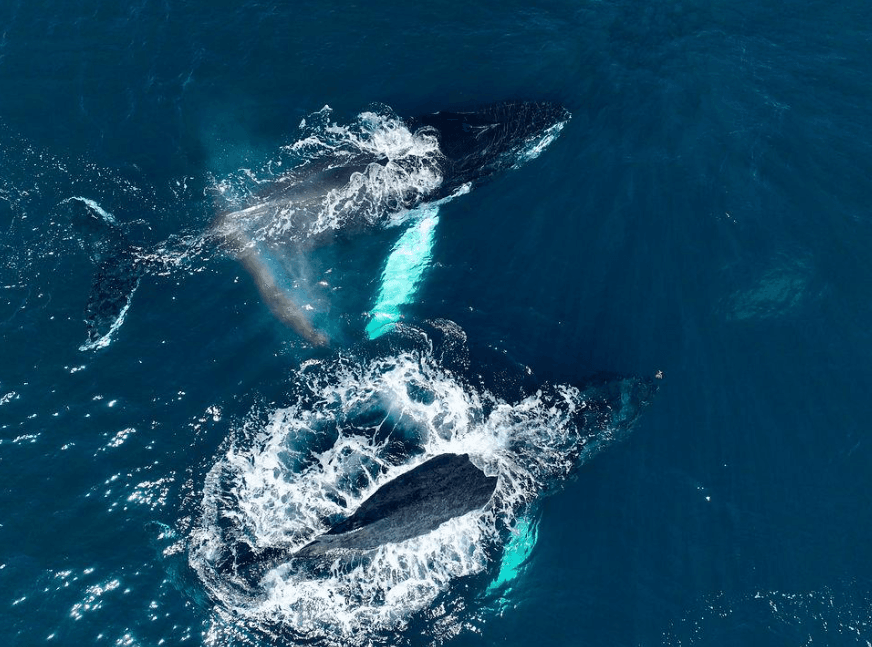
Samaná Bay in the Dominican Republic is known as a seasonal destination for North Atlantic humpback whales. During the breeding season, visitors may observe whales at the surface, while scientists can investigate whale behavior using appropriate observation and recording methods.
The general principles of acoustic identification are relevant to whale research in Samaná, but conclusions about individual vocal signatures require local evidence. It would be inaccurate to claim that researchers can identify every whale visiting the bay by its voice without validated data demonstrating that ability.
Combining acoustic recordings with photographs and careful behavioral observations could help researchers investigate individual variation where suitable research programs and data are available.
For visitors, the main lesson is that seeing a whale and identifying it scientifically are different things. A whale may be recognized from its markings, while its underwater sounds may help researchers understand its communication and behavior. Connecting those two kinds of evidence requires careful work.
Responsible whale watching also matters. Boats should follow applicable local rules and keep appropriate distances so that observing these animals does not unnecessarily disturb them. Visitors should never assume that a whale's vocal behavior reveals its identity or that a sound heard during an excursion can be attributed to a particular animal without scientific evidence.
Why Individual Vocal Identification Matters
If researchers can reliably associate certain vocalizations with known whales, they may be able to investigate questions about how individual animals use sound and how their vocal behavior changes.
For example, long-term acoustic records could help scientists study whether known individuals repeatedly use particular call types, how vocal behavior varies between contexts, and whether acoustic characteristics remain stable over time.
Such research may also improve our understanding of how whale populations communicate in busy or noisy marine environments.
Nevertheless, individual identification is only one possible application of acoustic research. Scientists can learn a great deal about whale communication, seasonal activity, and population-level patterns without identifying the animal responsible for every recorded sound.
Recognizing the limits of the evidence makes these findings more useful, not less valuable.
Frequently Asked Questions
Can scientists identify a humpback whale just by listening to its song?
Not reliably in every case. Humpback songs can share patterns across individuals and change over time. Individual identification requires evidence that a vocal pattern distinguishes a known whale and works reliably under the conditions in which it is used.
Does every humpback whale have a unique voice?
Scientists can observe individual variation in vocalizations, but that does not mean every whale has a permanently unique voiceprint. Similar sounds may be produced by different whales, and the same whale can produce different vocalizations.
How do researchers know which whale produced a recorded sound?
They may combine acoustic analysis with observations, photographs, synchronized recordings, or other reliable information. When several whales are present or sounds overlap, the source may remain uncertain.
Can AI recognize individual humpback whales?
AI can help compare recordings and identify potential patterns. Its reliability depends on the quality of the recordings, the reference data, and independent testing. A software match should not be treated as confirmed identity without validation.
Are whale songs more useful for identifying individuals or populations?
That depends on the question being studied. Shared song patterns can be useful for comparing groups and studying changes in communication. Individual identification requires stronger evidence that a particular acoustic feature is reliably associated with one whale.
Can visitors identify a whale's voice during a Samaná whale-watching trip?
Visitors may hear or record sounds in some circumstances, but a recording alone generally cannot establish which individual whale produced it. Scientific identification requires suitable evidence and careful analysis.
Conclusion
Scientists can investigate individual differences in humpback whale vocalizations, but identifying a particular whale by sound alone remains a challenging task. Similar songs may be shared by several animals, individual vocal behavior can change, and underwater recordings do not always reveal which whale produced a sound.
The most reliable research combines careful acoustic analysis with independent information about known whales and tests whether any proposed identification method works consistently.
For Samaná whale watching, this research adds another dimension to understanding humpback whales. Their visible markings can help researchers recognize individuals, while their underwater sounds offer clues about communication and behavior. Keeping these forms of evidence distinct helps scientists draw conclusions that are both accurate and meaningful.

Local explorer & expert guide in Glamping Los Haitises.