Why Do Humpback Whales Slap Their Fins in Samaná Bay?
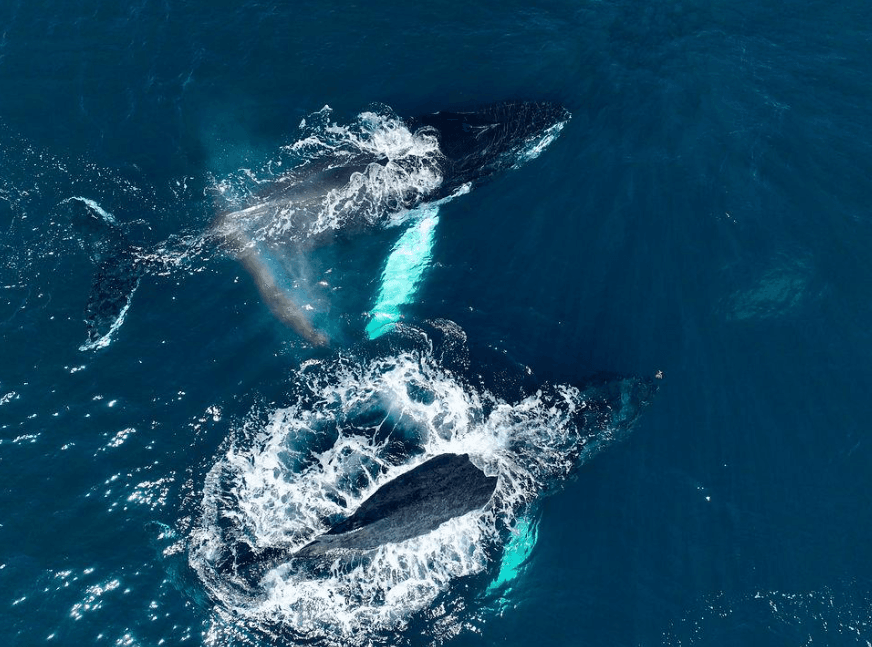
Imagine watching a humpback whale move through the water in Samaná Bay when one of its enormous pectoral fins suddenly rises and strikes the surface. A moment later, you hear a splash and see water spray into the air. The whale may repeat the movement, making the encounter even more memorable.
This behavior is commonly called pectoral fin slapping. It is one of several visible movements humpback whales can perform near the surface, and it can give whale watchers a fascinating glimpse of their physical abilities.
But why do humpback whales slap their fins Is the movement a form of communication, a social display, or simply part of their activity?
The answer is not always clear from a single observation. The surrounding behavior, the presence of other whales, and the sequence of movements can all provide useful clues. Here's what visitors should know when observing this behavior in Samaná Bay.
What Is Pectoral Fin Slapping?
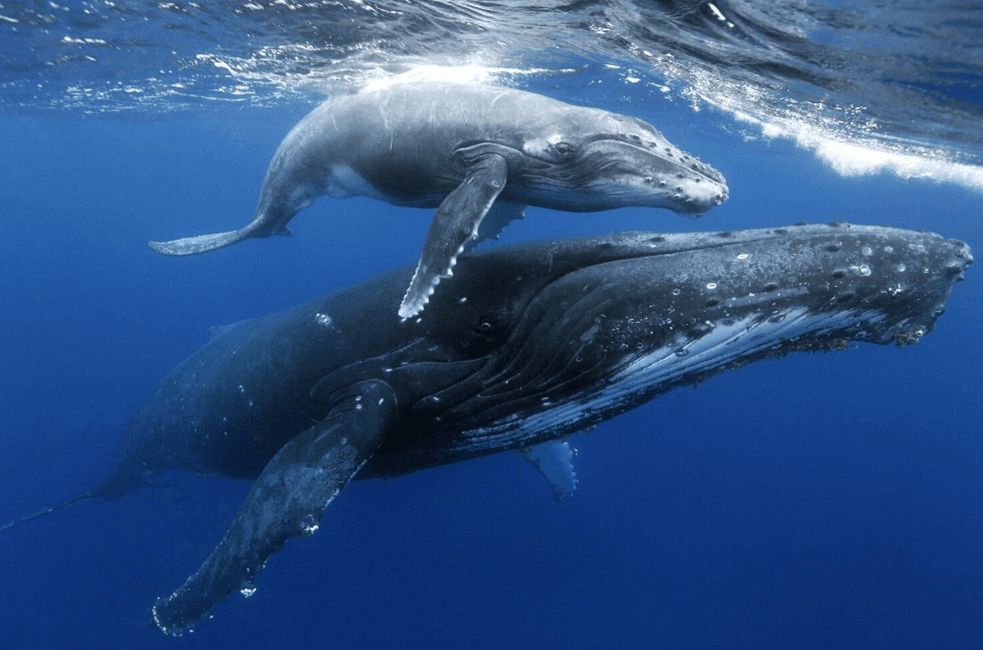
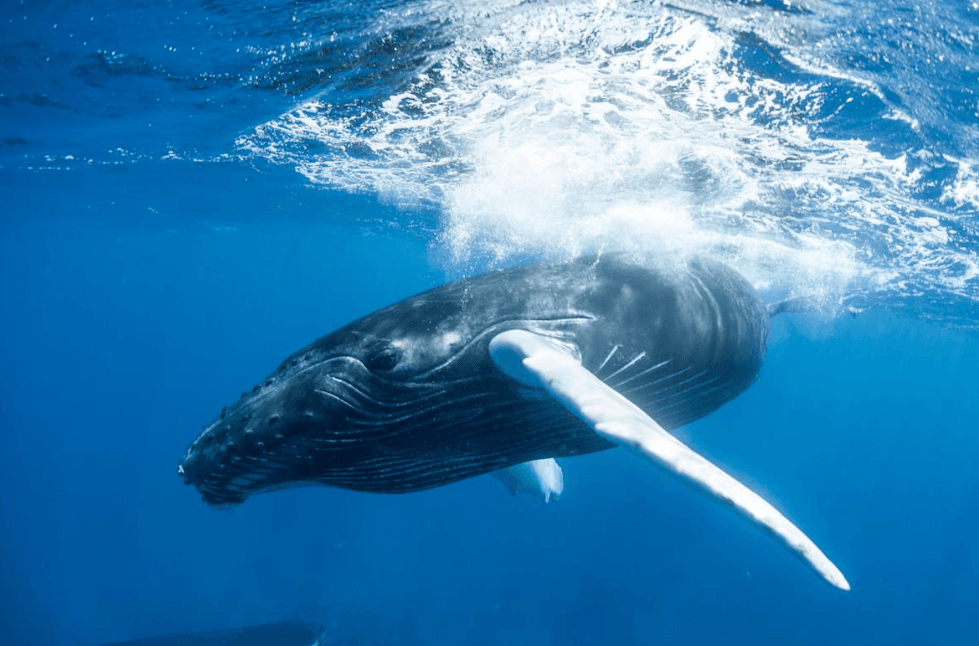
Humpback whales have exceptionally long pectoral fins on the sides of their bodies. These fins help the whales maneuver through the water and control their movements.
During pectoral fin slapping, a whale lifts one or both fins and brings them down against the water's surface. The impact can produce a noticeable splash and sometimes a sharp sound.
The movement may happen once or several times. A whale might raise a fin partly out of the water or lift much of it before striking the surface.
Fin slapping is different from ordinary swimming because the fin makes a distinct impact with the water. It is also different from tail slapping, in which the whale strikes the surface with its tail flukes.
Although the movement can look deliberate, its precise function cannot always be determined by watching from a boat.
1. Fin Slapping May Be Part of Social Communication
Humpback whales use sound and physical behavior in their interactions. A large fin striking the water can create a visible disturbance and an audible impact that may be detectable by nearby animals.
For that reason, researchers consider communication and social signaling among the possible explanations for some surface displays.
However, it would be inaccurate to claim that every fin slap sends a particular message. The meaning of a movement may depend on the whale's circumstances, and an observer may not have enough information to determine whether it is directed toward another whale.
If you see several whales close together, pay attention to their positions and movements before and after a fin slap. This context is more informative than assuming that the action always means the same thing.
2. It May Occur During Social Encounters
Humpback whales sometimes gather near one another, particularly during their breeding-season movements in warm-water regions. Their interactions can involve changes in direction, close approaches, separation, and conspicuous surface activity.
Pectoral fin slapping may occur during some of these encounters. A whale's repeated movements and the reactions of nearby animals may help researchers investigate what is happening.
Still, a fin slap alone does not prove that two whales are competing, courting, arguing, or establishing dominance.
When observing a group in Samaná Bay, look at the wider scene. Are the whales approaching each other Are they swimming in different directions Is one whale repeatedly displaying while others remain nearby?
These details can help you describe the encounter accurately without assigning an unsupported motive.
3. The Movement May Be Associated With Active Surface Behavior
Humpback whales can perform a range of conspicuous movements at the surface. Depending on the situation, an animal may slap a pectoral fin, strike the water with its tail, roll, or leap partly or entirely out of the water.
These behaviors differ in their mechanics and appearance. A fin slap involves a pectoral fin, while a tail slap involves the tail flukes. A breach involves the whale propelling much of its body out of the water.
Several types of surface behavior may occur during the same encounter, but one does not automatically explain another.
If you see a whale slap a fin and then breach, for example, you can record both observations. It is better not to conclude that the fin slap caused the breach unless there is reliable evidence for that interpretation.
4. Why Are Humpback Whale Fins So Long?
Humpback whales are famous for their unusually long pectoral fins. These appendages are proportionally much longer than the pectoral fins of many other whale species.
Their length and shape contribute to maneuverability. The fins help a humpback whale change direction and control its movement in the water.
When a whale raises a fin above the surface, visitors can appreciate its size more easily than when it is submerged. A fin slap makes the movement particularly visible because the fin briefly emerges before hitting the water.
The fins are also distinctive features that help people recognize humpback whales. Nevertheless, a large fin is not proof that the whale is performing a display for nearby boats or people. The animal may be engaged in behavior unrelated to the observers.
5. Why Can a Fin Slap Make Such a Loud Splash?
A whale's pectoral fin is a large body part moving against the resistance of water. When the fin strikes the surface, it displaces water and creates a splash.
The apparent loudness depends on several factors, including the force and angle of the impact, the distance from the observer, wind, waves, and other background sounds.
A fin slap may be easy to hear from a nearby whale-watching boat, while a similar movement farther away may be difficult to distinguish from ordinary wave noise.
Sound alone is not a reliable way to identify the behavior. If possible, combine what you hear with what you can actually see.
For visitors, this is one reason to remain attentive during a sighting. A whale's movements may be brief, and the most informative details can occur within seconds.
6. How Is Fin Slapping Different From Tail Slapping?
Both behaviors can create splashes, but they involve different parts of the whale's body.
Pectoral fin slapping occurs when a whale lifts a side fin and strikes the water with it. The movement can reveal the fin's length and shape.
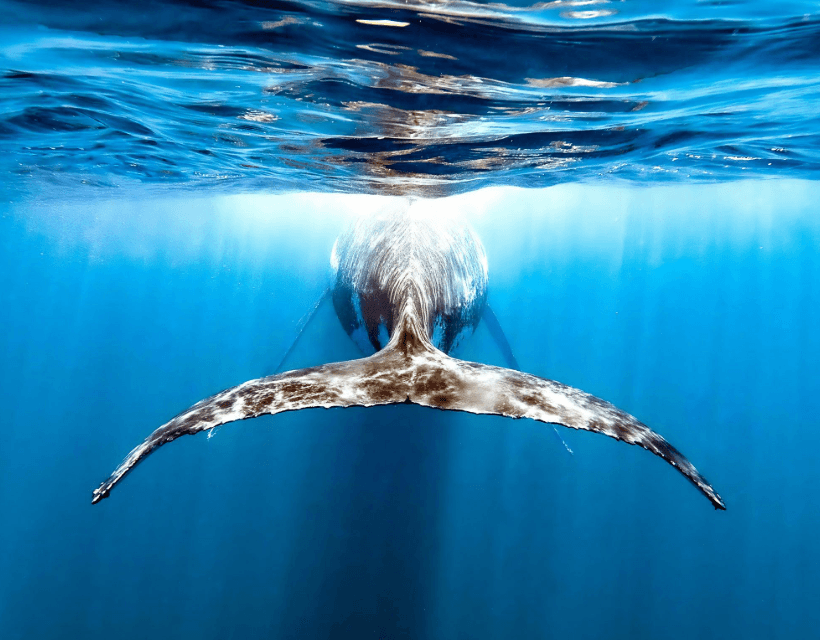
Tail slapping occurs when the whale brings its tail flukes against the water's surface. Depending on the movement, the tail may rise above the water before striking down or across it.
These actions should not be treated as interchangeable. They involve different anatomy, and their functions may vary with the circumstances.
If you are photographing whales in Samaná, try to notice which body part makes contact with the water. Even when a splash briefly hides the animal, the movement immediately before the impact may help you identify what happened.
7. Can Fin Slapping Help Researchers Study Humpback Whales?
Visible surface behaviors can provide useful information for whale researchers. Observations and video recordings may help document the frequency, duration, and context of particular movements.
For example, researchers may compare fin slapping with other behaviors, note whether other whales are nearby, and examine what happens before and after the movement.
One observation is rarely enough to establish a general explanation. Repeated records collected under suitable conditions can help scientists investigate whether a behavior is associated with particular social situations or other circumstances.
Visitors can contribute to wildlife awareness by observing carefully and recording what they see without disturbing the animals. If you share photographs or videos, describe the visible action rather than claiming a motive that the footage cannot establish.
8. Will You See Fin Slapping During a Whale-Watching Tour in Samaná?
Samaná Bay is a well-known destination for seasonal humpback whale watching in the Dominican Republic. During the broader winter and early-spring whale-watching period, visitors may have opportunities to observe whales surfacing and engaging in a range of natural behaviors.
However, fin slapping is unpredictable. A whale may surface quietly, change direction, expose its tail, or remain below the water for a while. It may never slap a fin during a particular tour.
No responsible operator should guarantee that visitors will witness a specific wild behavior.
When planning your trip, review current seasonal information and the details of the excursion you are considering. Be prepared for a wildlife experience in which the animals determine what happens and when.
The reward is not limited to dramatic splashes. Watching a whale breathe, move across the bay, or disappear beneath the surface can also be memorable.
9. How Can You Observe Fin Slapping Responsibly?
If a humpback whale begins slapping its fins, let the encounter unfold naturally. Do not encourage a captain to chase the whale or move closer simply to obtain a more dramatic photograph.
Responsible whale watching means respecting applicable regulations and following the operator's guidance about safe viewing distances and boat behavior.
Keep these practices in mind:
- Listen to your guide or captain and follow all instructions.
- Never attempt to touch, feed, or provoke a whale.
- Avoid shouting or making sudden movements in an attempt to attract its attention.
- Photograph the behavior from the permitted viewing position.
- Do not assume a whale is displaying for the boat.
- Allow the animal to change direction or leave the area without pursuit.
Wildlife viewing is most rewarding when visitors can observe natural behavior without interfering with it.
10. Tips for Photographing a Pectoral Fin Slap
Fin slapping can be difficult to photograph because the movement may happen quickly. The whale might lift its fin, strike the water, and return to swimming before you are ready.
A few simple techniques can improve your chances of recording the event:
Watch the whole whale. Focusing only on the splash can cause you to miss the movement that precedes it.
Keep your camera ready. If a whale is already active at the surface, be prepared to capture a sequence rather than waiting for one perfect frame.
Use a suitable shutter speed. A faster shutter speed can help freeze a quick movement in adequate light, although the best settings depend on your equipment and conditions.
Leave room around the subject. A wider composition may include the fin, the splash, and enough of the whale's body to show what happened.
Avoid risky repositioning. Do not lean dangerously over the boat or disregard crew instructions for a photograph.
Remember that no photograph is guaranteed. A respectful viewing experience matters more than capturing a particular action.
Frequently Asked Questions
Why do humpback whales slap their pectoral fins?
Fin slapping may occur during social interactions or other surface activity. Its exact function is not always known, and the context is important when interpreting an observation.
Is fin slapping the same as tail slapping?
No. Fin slapping involves one or both pectoral fins, while tail slapping involves the tail flukes. Both can create conspicuous splashes.
Does fin slapping mean a humpback whale is angry?
Not necessarily. A fin slap alone does not reveal the whale's emotional state. Avoid interpreting the behavior as anger or aggression without supporting evidence.
Can you hear a humpback whale slap its fin?
Sometimes. The impact can produce a noticeable splash and sound, but how clearly it can be heard depends on distance, weather, waves, and other background noise.
Are humpback whales guaranteed to slap their fins in Samaná Bay?
No. Whale behavior varies, and a particular movement may not occur during your excursion. Responsible tour planning should not depend on seeing a specific behavior.
What should I do if a whale begins fin slapping near the boat?
Follow the captain's and guide's instructions, remain in a safe position, and observe without trying to provoke or pursue the animal.
Plan Your Samaná Whale-Watching Experience
A humpback whale slapping its pectoral fin can be an impressive sight, revealing both the size of the animal and the power of its movements. It may offer clues about the whale's activity, but the precise meaning of the behavior is not always obvious.
If you are planning a visit to the Dominican Republic, explore available Samaná whale-watching excursions and check their current details before booking. Look for operators that prioritize responsible wildlife observation, clear visitor information, and compliance with applicable regulations.
Ready to explore Samaná Bay? Discover available whale-watching tours and prepare for a wildlife experience shaped by the natural behavior of the whales.
Final takeaway
Pectoral fin slapping occurs when a humpback whale brings one or both long side fins against the water. The movement may appear during social encounters or other surface activity, but it does not have one confirmed meaning in every situation. Observing the wider sequence of behavior—and giving the whale plenty of space—is the best way to appreciate this remarkable sight.

Local explorer & expert guide in Glamping Los Haitises.