How Long Do Humpback Whales Stay Underwater in Samaná Bay?
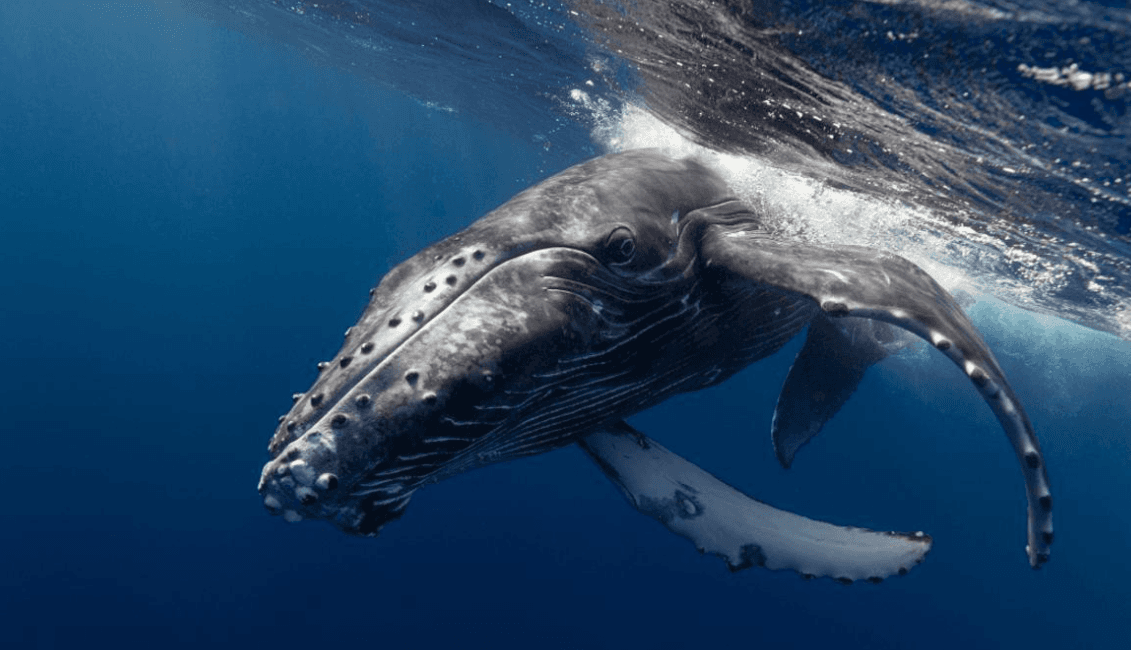
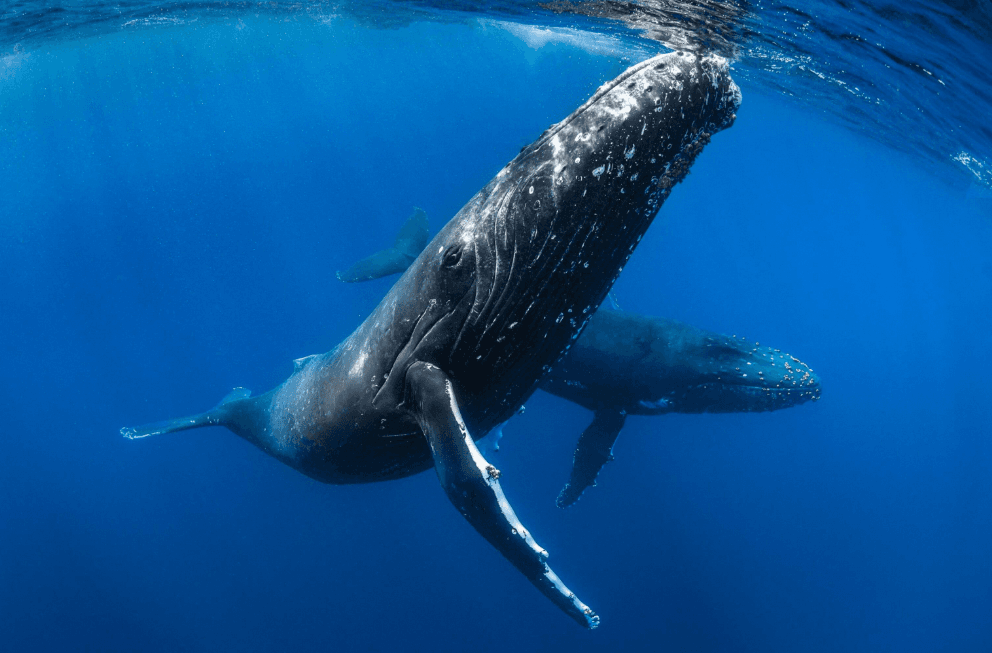
Humpback whales are frequently seen at the ocean surface during the seasonal whale-watching period in Samaná Bay, Dominican Republic. Yet every visible encounter tells only part of the story. Between surfacing events, these large marine mammals spend time underwater, where observers from boats cannot always see what they are doing.
Scientists study underwater dive duration to understand whale behavior, activity patterns, and how animals use their marine environment. By recording when a whale disappears beneath the surface and when it reappears, researchers can build a record of its dive intervals.
However, measuring a dive accurately requires more than looking at a clock. Researchers must define the start and end of each observation, distinguish individual dives from periods of surface activity, and account for times when the whale cannot be tracked reliably.
What Is Humpback Whale Dive Duration?
Dive duration is the amount of time a whale spends underwater during a particular dive. In a surface-based study, researchers commonly estimate it from the time the whale submerges until it is next observed surfacing.
The duration of a dive can vary depending on the animal's activity, individual differences, and environmental conditions. A whale making a relatively short submergence may return to the surface quickly, while another dive may last considerably longer.
There is no single dive duration that applies to every humpback whale. Researchers therefore collect repeated observations rather than assuming that one measurement represents the species' normal behavior.
1. Recording the Start of a Dive
The first step is identifying when a whale begins a period underwater.
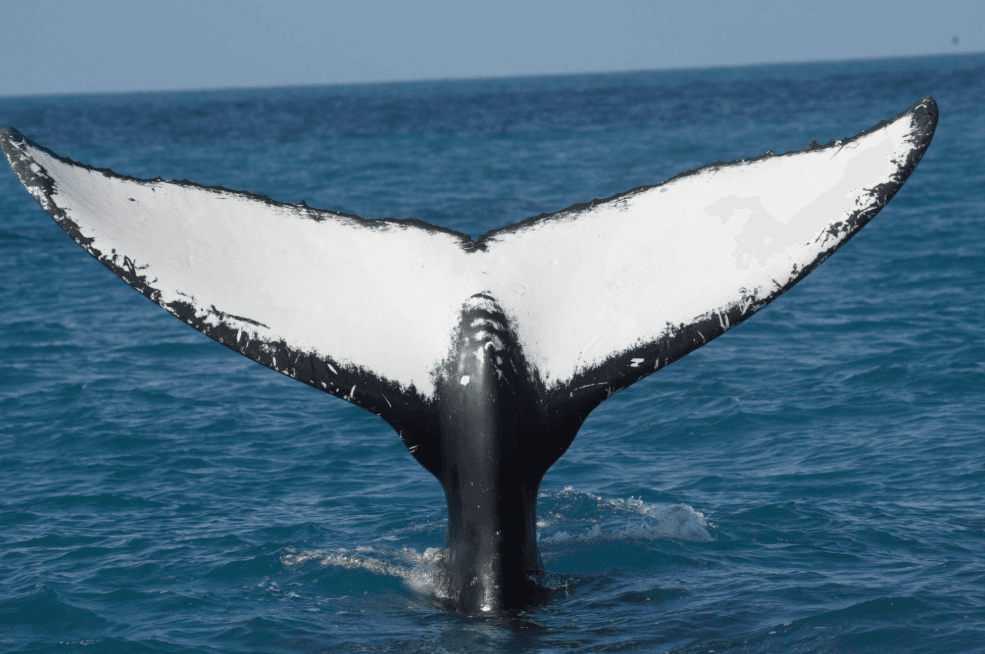
Researchers may observe a whale moving beneath the surface after a sequence of breaths or descending after raising its tail flukes. These visible actions can help observers recognize a dive, although not every dive is preceded by a clear display of the tail.
The observer records the time of submergence using a watch, synchronized clock, video timestamp, or another suitable recording system.
For consistency, researchers should follow a defined observation protocol. For example, a study might record the last clearly observed moment before the whale becomes fully submerged.
This standardization helps ensure that different observers record events in comparable ways.
2. Recording When the Whale Surfaces Again
The next step is recording the whale's return to the surface.
Researchers note the time when the whale becomes visible again and use that timestamp to calculate the interval between the two observations.
For example, imagine a hypothetical whale disappears beneath the surface at 10:15:00 a.m. and is first observed surfacing again at 10:18:30 a.m.
The recorded interval is three minutes and thirty seconds.
This is an illustrative example, not a measured dive duration for a humpback whale in Samaná Bay.
The result is most reliable when the observer can confidently identify both events and knows the whale was not missed during the interval.
3. Calculating the Duration of a Dive
The calculation is straightforward:
Dive duration = Surfacing time − Submergence time
Researchers can express the result in seconds or minutes, depending on the length of the dive and the precision of the timestamps.
Repeated measurements allow them to calculate summaries such as the average or median observed dive duration. They may also report the range of recorded durations to show how much the measurements vary.
The median can be especially useful when some dives are much longer than others, because unusually long observations can influence the average.
Researchers should also explain how they handled dives that began before observations started or ended after the observation period finished.
4. Distinguishing a Dive From Surface Activity
Humpback whales may surface several times in succession before making another longer submergence.
A researcher needs a consistent method for deciding whether consecutive observations represent separate dives or a period of surface activity.
One approach is to record each surfacing event, including its timestamp and the whale's behavior. The research protocol can then define which events mark the beginning and end of a dive.
This distinction matters because a series of brief submergences and surfacings can produce a different record from one continuous underwater interval.
Researchers should avoid combining observations using arbitrary rules that make comparisons between studies unreliable.
5. How Video Helps Measure Dive Intervals
Video recordings can improve the accuracy of dive-duration measurements by preserving the sequence of visible events.
Researchers can review footage to check when a whale disappeared, whether it surfaced briefly, and when it became visible again. Video timestamps can also help resolve disagreements between observers.
However, a camera may lose sight of a whale because of waves, glare, distance, or the movement of the boat. The whale may still be near the surface even though it is no longer visible in the footage.
For that reason, researchers must distinguish a confirmed underwater interval from a period when the whale's location is simply unknown.
6. Using Electronic Tags to Study Underwater Behavior
Surface observations provide useful information, but they cannot reveal every detail of a whale's underwater activity.
When appropriate and permitted, researchers may use specialized electronic tags to collect additional information about movement and diving. Depending on the equipment, tags may record depth, movement, or other measurements over time.
Depth data can help researchers distinguish a shallow submergence from a deeper dive. Movement records may also reveal patterns that cannot be established from surface sightings alone.
Tagging requires suitable expertise, permits, animal-welfare safeguards, and careful consideration of potential effects on the whale. It is not necessary for every dive-duration study.
Electronic tags also have limitations, including finite battery life, attachment duration, data quality, and the possibility of incomplete records.
7. Why Some Dive Measurements Are Uncertain
A dive-duration record can contain uncertainty even when an observer uses a reliable clock.
Common problems include:
- Missed surfacing events: The whale may surface outside the observer's field of view.
- Uncertain submergence time: The exact moment a whale disappears may be difficult to identify.
- Temporary loss of visual contact: Waves or glare can interrupt observations.
- Identification errors: Two nearby whales may be confused, causing observations to be assigned to the wrong animal.
- Incomplete observation periods: A dive may begin before a survey starts or continue after it ends.
Scientists can reduce these problems by recording observation quality, using synchronized timestamps, following consistent protocols, and marking uncertain intervals rather than treating them as complete measurements.
8. What Can Dive Duration Tell Scientists?
Repeated dive-duration measurements can help researchers describe how whales use their time during observed encounters.
When combined with other evidence, such as behavior records, depth measurements, or suitable tagging data, dive records may contribute to investigations of movement and activity.
For example, researchers could compare dive intervals associated with different observed behaviors, provided the behavior categories are defined consistently and the dataset is sufficiently large.
However, dive duration alone does not establish why a whale submerged. A longer interval does not automatically indicate feeding, distress, exhaustion, or any other specific behavior.
Scientists need additional observations before drawing conclusions about what a whale was doing underwater.
9. Why Dive Research Matters in Samaná Bay
Samaná Bay is an important seasonal destination for humpback whales and a setting where researchers can study their behavior.
Carefully collected dive records may contribute to broader research on whale activity during the breeding season. When combined with other observations, they can help build a more detailed picture of how whales behave in the region.
Nevertheless, dive measurements collected during a limited number of whale-watching trips should not automatically be treated as representative of all humpback whales visiting Samaná Bay.
Local conclusions require suitable data, transparent methods, and appropriate consideration of the conditions under which observations were collected.
Frequently Asked Questions
How do scientists calculate a humpback whale's dive duration?
They record the start of a dive and the next confirmed surfacing time, then subtract the first timestamp from the second.
Do all humpback whales stay underwater for the same amount of time?
No. Dive duration varies between observations and individuals. Researchers use repeated measurements to describe that variation.
Can researchers measure dives from a whale-watching boat?
Yes. Surface observers can record dive intervals, but they must account for missed surfacing events and periods when visual contact is lost.
Can electronic tags measure how deep a whale dives?
Some specialized tags record depth and other movement information. Their use depends on the research objectives, equipment, permits, and animal-welfare considerations.
Does a long dive mean a whale is feeding?
Not necessarily. Dive duration alone cannot confirm feeding behavior. Researchers need additional evidence to interpret what the whale may be doing underwater.
Conclusion
Scientists measure humpback whale dive duration by recording submergence and surfacing times, calculating the elapsed interval, and repeating the process across suitable observations. Video, electronic tags, and consistent observation protocols can improve the quality of the data.
The main challenge is distinguishing a genuine underwater interval from a period when a whale is simply out of sight. By acknowledging uncertainty and combining dive records with other evidence, researchers can develop a more reliable understanding of humpback whale behavior in Samaná Bay.

Local explorer & expert guide in Glamping Los Haitises.