How Do Scientists Study Humpback Whale Reproduction in Samaná Bay?
Every winter, humpback whales travel to warm waters in the Caribbean, including the waters around Samaná Bay in the Dominican Republic. During this seasonal visit, breeding and calving are important parts of their life cycle.
For scientists, these whales offer an opportunity to investigate how reproduction occurs in the wild, how mothers and calves interact, and how successful reproduction contributes to the future of a population.
Studying whale reproduction is challenging because these animals spend much of their lives underwater, move over vast distances, and cannot be observed continuously. Researchers therefore combine observations at the surface with photographs, population records, acoustic monitoring, and other scientific methods.
Understanding this work helps explain why Samaná Bay is valuable not only for whale watching but also for learning about North Atlantic humpback whales.
Why Do Humpback Whales Visit Samaná Bay During Breeding Season?
Humpback whales undertake seasonal migrations between high-latitude feeding grounds and warmer breeding areas. The North Atlantic population includes whales that visit the Caribbean during the winter months.
Samaná Bay is one of the Dominican Republic's well-known locations for observing these whales during their breeding season. The wider region provides habitat where mating and calving can occur.
Breeding areas and feeding grounds serve different purposes in the whales' annual cycle. In colder waters, humpbacks build energy reserves by feeding. During the breeding season, they may spend extended periods in warmer waters where they generally feed little or not at all.
However, not every whale seen in Samaná is necessarily engaged in breeding. Some individuals may be traveling through the region, resting, or participating in other activities.
Scientists consider the wider context, including the season, observed behavior, and information from other locations, when interpreting what they see.
1. Observing Whale Behavior From Research Vessels
One of the most direct ways to study reproduction is to observe whales from boats.
Researchers may record how whales approach one another, travel in groups, interact at the surface, and change their behavior over time. These observations can help scientists investigate possible courtship and competition.
During the breeding season, humpback whales sometimes form groups in which several individuals interact. Some groups may involve competition among males, although the composition and behavior of a group can change.
Scientists use standardized observation methods to record these events rather than assuming that every interaction has the same purpose.
For example, a group of whales traveling closely together may be exhibiting social behavior, but the observation alone may not establish whether mating will occur.
Repeated observations across different days and seasons help researchers identify patterns that a single encounter cannot reveal.
2. How Do Scientists Recognize Possible Breeding Behavior?
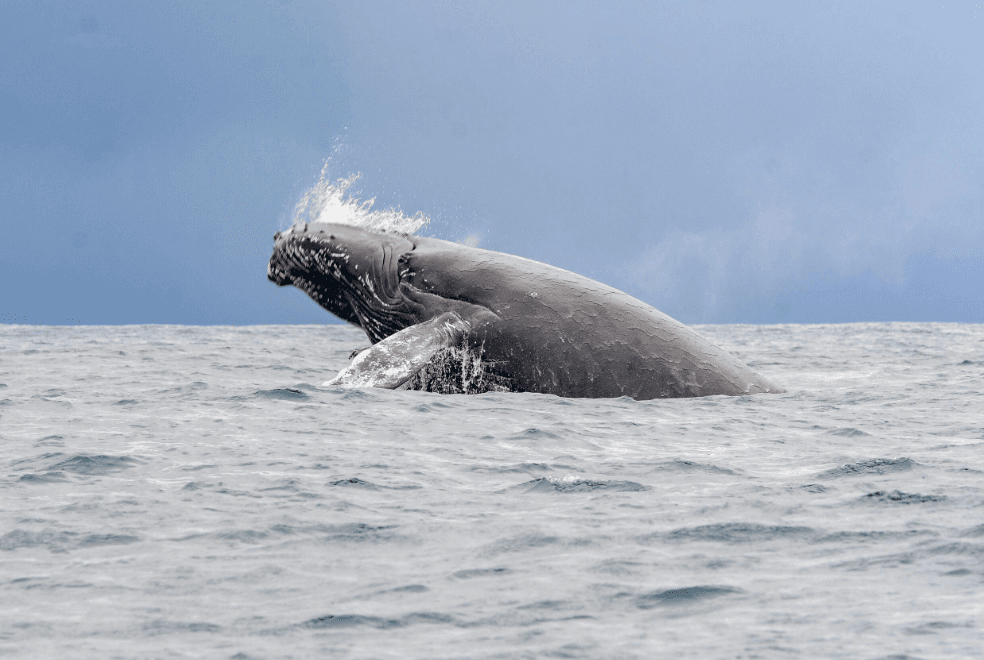
Humpback whales display a variety of behaviors during the breeding season. Some may swim close together, change positions within a group, or engage in physical interactions.
Researchers document these behaviors carefully and compare observations across individuals and locations.
The important distinction is between observing a behavior and determining its biological purpose. Scientists may recognize patterns consistent with courtship or competition, but they cannot always determine the exact motivation behind an individual whale's actions.
Humpback whale behavior can also be influenced by factors beyond reproduction, including social relationships and changing environmental conditions.
For this reason, researchers use multiple observations and clear definitions when classifying behaviors.
For whale watchers in Samaná Bay, these observations can make an excursion more informative. A guide may explain what researchers know about a particular interaction while acknowledging when its meaning remains uncertain.
3. Studying Pregnancy and Calving
Researchers also investigate how often females reproduce and how many calves survive through their early development.
Directly determining pregnancy in a free-swimming whale can be difficult. Scientists may use specialized methods, such as analyses of biological samples collected through appropriate research procedures, when the circumstances and permits allow.
More commonly, researchers can document a mother with a newborn or young calf during the breeding season.
These sightings provide evidence that a female has reproduced, even if scientists do not know the exact conception date or birth date.
Calf observations are especially useful when researchers can identify the mother and compare sightings across different years. Such records can contribute to studies of reproductive intervals, calf survival, and individual reproductive histories.
However, researchers must be careful not to assume that every female without a visible calf has not reproduced. She may be pregnant, may have lost a calf, or may simply be traveling without one during that particular observation.
4. What Can Mother-and-Calf Observations Reveal?
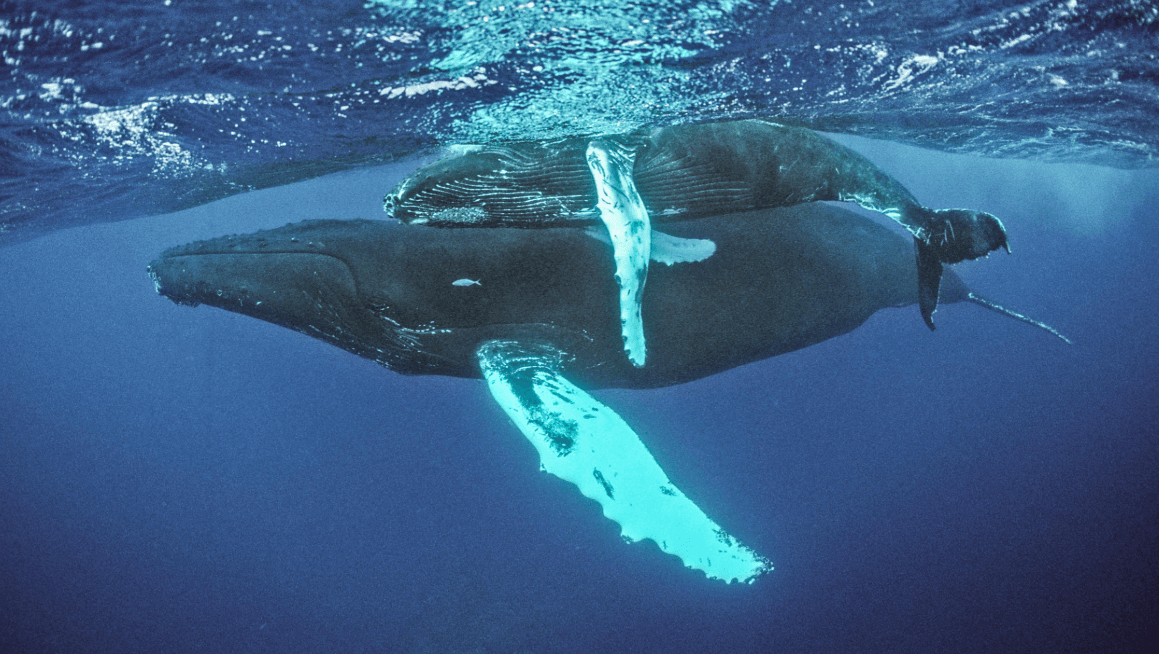
A mother and calf provide researchers with opportunities to study early development and maternal care.
Scientists may record how closely a calf remains to its mother, how the pair moves together, and whether the calf appears to be nursing or engaging in other interactions.
These observations help researchers understand the relationship between maternal behavior and the early life of a humpback whale.
Repeated observations can also help establish how long a particular calf remains associated with its mother, especially when the pair can be recognized across multiple sightings.
Nevertheless, the behavior visible from a boat represents only a small part of the pair's life. Much of their interaction takes place underwater and cannot be fully understood from surface observations alone.
During whale-watching trips in Samaná Bay, visitors may see mothers and calves swimming together. These encounters can illustrate the importance of breeding habitat, but a brief sighting cannot reveal the complete history of the pair.
5. Using Photographs to Study Reproductive Histories
Photographs can help scientists recognize individual whales and connect observations from different seasons.
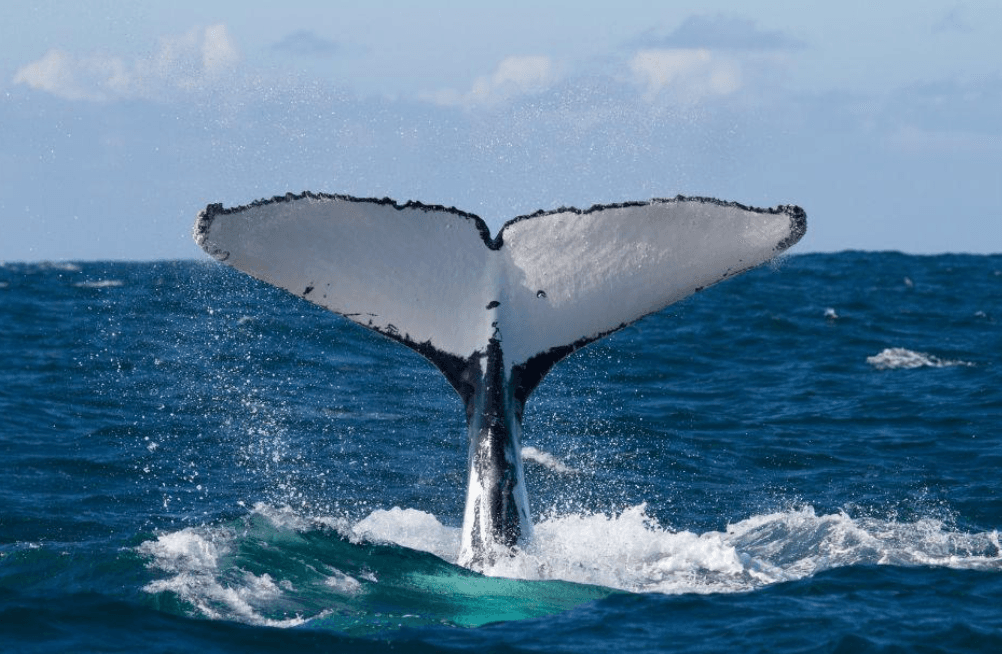
Researchers may use distinctive features, particularly tail-fluke patterns, to identify an individual. When a female is documented with a calf and later recognized in another year, researchers can add the new observation to her record.
Over time, these records may reveal how frequently a known female is seen with calves, how long researchers have documented her, and which areas she visits during different seasons.
However, photographic records have limitations. A whale may go unobserved for several years, and the absence of a calf in a photograph does not prove that the female has not reproduced.
Researchers therefore combine identification records with other evidence and avoid treating incomplete observations as definitive reproductive histories.
6. How Do Scientists Estimate Reproductive Success?
Reproductive success is not measured simply by counting the whales seen in one season.
Scientists may investigate several factors, including the number of calves born, the survival of calves during their early lives, the proportion of females that reproduce, and the number of calves that survive to later stages.
These measurements help researchers understand whether a population is maintaining or increasing its numbers over time.
Obtaining accurate estimates requires consistent observation and suitable sampling methods. Researchers must also account for calves that are not detected, whales that move between study areas, and uncertainty in identifying individuals.
For example, seeing many calves in Samaná Bay during one season can indicate substantial calving activity, but it does not by itself establish the population's overall reproductive rate.
Long-term records provide a more useful basis for understanding trends.
7. The Role of Underwater Sound in Reproductive Research
Humpback whales produce a variety of sounds, including the complex sequences commonly known as whale songs.
Researchers study these sounds to investigate communication and changes in acoustic behavior across seasons. Song activity is often associated with breeding-season behavior, particularly among males.
Scientists may use underwater acoustic monitoring to record vocal activity without needing to see the whales continuously.
However, hearing a song does not automatically identify the singer, establish its sex, or confirm that mating is occurring. Acoustic evidence is most informative when interpreted alongside other observations and research findings.
In areas such as Samaná Bay, acoustic research can complement surface observations and help scientists investigate whale activity in the wider marine environment.
8. Why Is Reproductive Research Important for Conservation?
Understanding reproduction helps scientists assess how whale populations may respond to environmental changes and other pressures.
If researchers observe changes in calf numbers, survival, or reproductive patterns over time, those changes may provide useful information about population health. Scientists must then investigate possible explanations rather than assuming that one factor caused the change.
Potential influences include food availability, habitat conditions, environmental variability, and human activities that affect marine mammals.
Reliable reproductive information can support conservation planning by helping researchers identify important habitats and evaluate population trends.
For Samaná Bay, this work reinforces the importance of protecting breeding and calving areas and maintaining responsible whale-watching practices.
Tour operators and visitors can contribute by following local guidance, respecting appropriate viewing distances, and avoiding actions that interfere with whale behavior.
Frequently Asked Questions
Do humpback whales mate in Samaná Bay?
Samaná Bay is part of the wider Caribbean breeding region used by North Atlantic humpback whales. Mating can occur in breeding areas, but not every whale observed in the bay is necessarily mating.
How do scientists know if a humpback whale has given birth?
A researcher may document a female with a newborn or young calf. Specialized research methods may provide additional information in certain circumstances, but the exact birth date is often unknown.
Can researchers tell whether a whale is pregnant from a boat?
Usually, not with certainty from visual observation alone. Researchers may need specialized methods or additional evidence to assess pregnancy in a living whale.
Why are humpback whale calves important to researchers?
Calf observations help scientists study reproduction, maternal care, early development, and calf survival. Long-term records can also contribute to population research.
Can whale songs confirm that mating is occurring?
No. Songs provide useful information about acoustic behavior, but hearing a song does not prove that mating is taking place.
How does reproductive research help protect humpback whales?
It helps scientists understand calf survival, reproductive patterns, and population trends. This information can support conservation decisions and the protection of important marine habitats.
Final Thoughts
Scientists study humpback whale reproduction through careful observation, individual identification, calf records, acoustic monitoring, and specialized research methods.
Each approach provides a different part of the picture. No single sighting can reveal an entire reproductive history, but observations collected over many years can help researchers understand how whales reproduce and how populations change.
Samaná Bay offers an important opportunity to observe North Atlantic humpback whales during their seasonal visit to the Caribbean. By learning about the science behind breeding and calving, visitors can better appreciate the importance of this habitat.
Responsible whale watching supports an experience in which people can observe these remarkable animals while respecting their natural behavior and the environment they depend on.

Local explorer & expert guide in Glamping Los Haitises.