Why Do Humpback Whales Sometimes Surface in Unexpected Places During Whale-Watching Trips?
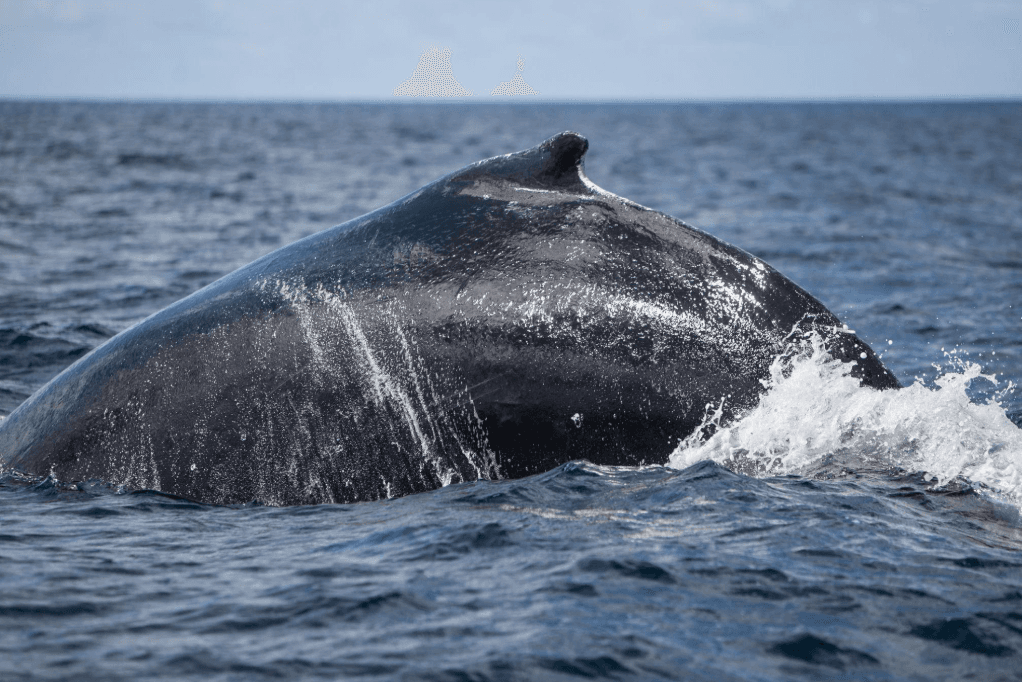
Imagine watching a humpback whale surface beside a whale-watching boat in Samaná Bay, Dominican Republic. You see its back, watch it disappear beneath the water, and wait for it to return. After several minutes, a blow suddenly appears much farther away than expected.
Why did the whale surface there instead of where you last saw it?
This is a common question during whale-watching trips. Humpback whales spend much of their time underwater, where observers cannot continuously track their movements from the surface. While a whale is submerged, it can travel, change direction, interact with another whale, or adjust its swimming path before surfacing again.
Understanding these movements helps explain why predicting the next appearance of a humpback whale can be difficult. It also shows why whale watching requires patience, flexibility, and respect for the animals' natural behavior.
Why Do Humpback Whales Disappear After Surfacing?
Humpback whales are marine mammals that breathe air. They must return to the surface periodically, but they do not remain visible throughout their time in the water.
After breathing, a whale may submerge to continue swimming. Depending on its activity, it might remain underwater for a relatively short interval or make a longer dive.
During that interval, the whale's location can change substantially. Observers on a boat may know where the animal disappeared, but they cannot automatically know its exact underwater route or its future surfacing point.
This creates a gap between the last confirmed sighting and the next one. The longer that gap lasts, the more uncertainty there may be about the whale's location.
A whale surfacing somewhere unexpected does not necessarily mean it has made an unusual movement. It may simply have traveled underwater in a direction that was not visible from the boat.
How Far Can a Whale Travel Underwater Before Surfacing Again?
The distance depends on several factors, including how long the whale remains submerged, its swimming speed, and the route it follows.
A simple way to understand this relationship is:
Distance traveled = average swimming speed × time spent moving
For example, if a whale maintained an illustrative average speed of 2 meters per second for 60 seconds, it would travel approximately 120 meters during that interval. This is a mathematical example, not a measurement of a typical humpback whale dive in Samaná Bay.
Actual movements can be more complicated. A whale may change speed, turn, slow down, or alter its swimming direction while underwater.
It is therefore difficult to estimate the next surfacing location using only the time elapsed since the previous sighting.
Even a relatively short underwater journey can create a noticeable difference between the whale's last visible position and its next appearance.
Why Might a Humpback Whale Change Direction Underwater?
Humpback whales do not have to follow a straight route between surfacing events. Their movements can respond to their immediate surroundings and activities.
Traveling through the water
A whale moving through the bay may follow a changing route rather than a straight line. It might adjust its direction as it travels through the water.
If observers assume that the whale will continue in the same direction after disappearing, they may look for it in the wrong area.
Interacting with other whales
Humpback whales may encounter other individuals or move as part of a group. Social interactions can involve changes in spacing and direction.
When more than one whale is present, tracking becomes more complicated because the animals may submerge at different times and reappear at different locations.
Responding to their surroundings
A whale may alter its path as it moves through its environment. However, observers should not assume a particular reason for a direction change unless the available evidence supports that interpretation.
For example, a whale that changes direction near a vessel has not necessarily been frightened or disturbed by it. Establishing a connection between the vessel and the whale's behavior requires more evidence than a single observation.
How Do Breathing Patterns Affect the Next Surfacing Point?
Humpback whales need to breathe air, but their surfacing patterns are not a perfectly predictable schedule.
A whale may surface several times over a period before making a deeper dive. The timing and location of its next appearance can depend on its activity and movement.
For whale watchers, this means that knowing when a whale last surfaced does not provide an exact countdown to its next appearance.
A guide may use the whale's recent behavior to decide where to watch, but the prediction remains uncertain. The animal could surface earlier than expected, remain underwater longer, or appear at a different point.
The most useful approach is to keep watching a broad area rather than focusing exclusively on the precise spot where the whale disappeared.
Why Can a Whale Reappear on the Opposite Side of a Boat?
A whale-watching boat and a submerged whale move independently. The vessel may continue forward, turn, or adjust its position while the whale is underwater.
As a result, the whale's next surfacing point may be on the opposite side of the vessel from where passengers expect it.
The relative position of the boat matters as much as the whale's underwater movement. Even if the whale follows a fairly steady route, the boat's movement can change which side of the vessel is closest to the next surfacing point.
This can make sightings feel sudden or surprising.
Passengers should avoid rushing across the boat to follow a possible sighting. Following the crew's directions and remaining within safe observation areas helps everyone enjoy the encounter without creating unnecessary risks.
Can Guides Predict Where a Whale Will Surface Next?
Guides can sometimes make an informed estimate based on the animal's last observed position, recent direction of travel, and surfacing behavior. However, an estimate is not a guarantee.
Several uncertainties make precise prediction difficult:
- The whale may change direction while submerged.
- Its underwater swimming speed may vary.
- The time until the next surfacing may be uncertain.
- The boat may change position during the interval.
- Other whales may appear and complicate visual tracking.
For these reasons, responsible guides generally need to remain flexible. Rather than assuming the whale will appear at a specific point, they can monitor a wider area and look for new evidence.
No observation technique allows a guide to know every underwater movement of a free-swimming whale without appropriate tracking data.
How Do Researchers Study Movements Between Surfacing Events?
Scientists can investigate underwater movement using methods suited to the research question.
Visual tracking
Observers record where a whale is seen, its apparent direction of travel, the time of the sighting, and when it disappears. If the whale reappears, researchers can compare the two locations.
This approach provides useful surface observations, but it cannot reveal the complete route traveled underwater.
Photo-identification
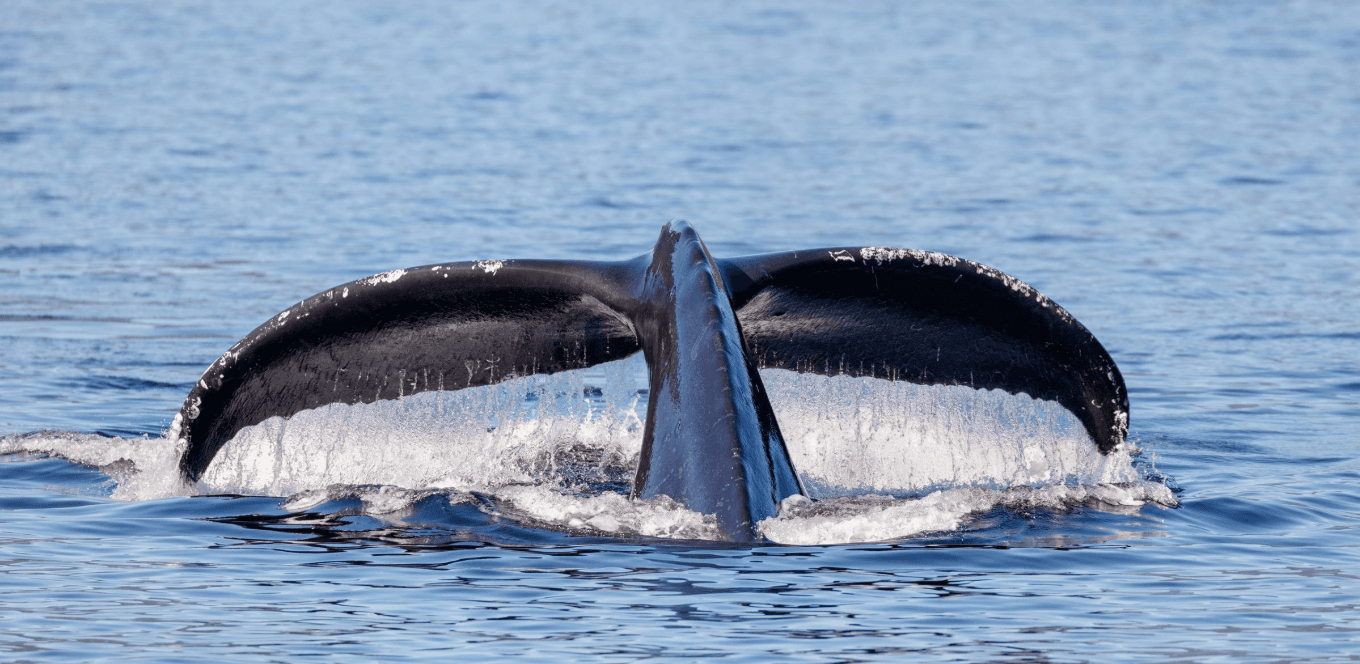
Photographs of distinctive markings, particularly on the underside of the tail flukes, may help researchers identify individual whales when image quality and markings permit.
Matching photographs from separate sightings can help establish that the same individual was observed again. However, photo-identification alone does not show the whale's exact underwater path between those sightings.
Electronic tracking methods
Some marine research projects use tracking devices or other specialized instruments to study movement. The suitability of these methods depends on the study's purpose, permissions, animal-welfare considerations, and available resources.
Such methods can provide information that surface observations cannot, but they should not be assumed to be in use on ordinary whale-watching trips in Samaná Bay.
The important distinction is between observing two surface locations and knowing the complete route between them. The first may be possible with visual observations; the second generally requires additional information.
Does an Unexpected Surfacing Mean the Whale Is Avoiding the Boat?
Not necessarily.
A whale surfacing far from its previous location can be explained by ordinary underwater movement. Without additional evidence, observers cannot reliably conclude that the animal changed direction to avoid a vessel.
To investigate a possible response to boats, researchers would need to examine the whale's behavior before, during, and after the encounter. They would also need to consider other explanations for the movement.
Responsible whale watching does not depend on proving that a whale is disturbed. Operators should follow applicable regulations and responsible viewing practices regardless of whether a particular animal appears to react to the vessel.
Passengers should never encourage a boat to chase a whale simply because it surfaced farther away.
What Should Visitors Do When a Whale Disappears?
The best response is usually to remain patient and continue observing.
Keep scanning the water. A whale may reappear in a different direction, so watching only the original location can mean missing the next sighting.
Listen to the guide. The guide may have a better view of the surrounding area or may be monitoring the whale's last known direction.
Avoid assuming the whale is gone. A submerged whale may still be nearby, but its precise position cannot be confirmed without another observation or suitable tracking information.
Do not expect a fixed schedule. Whale movements are not timed to meet visitors' expectations.
Respect the animal's space. A whale's disappearance is not a reason to pursue it aggressively or approach another animal without regard for local rules.
These simple habits help make whale watching more enjoyable while supporting safe and responsible observation.
Why Are Unexpected Surfacing Locations Part of the Whale-Watching Experience?
Whale watching is different from observing an animal in a controlled setting. Humpback whales choose where to swim, when to surface, and how to move through their environment.
The uncertainty is part of what makes each sighting different. One whale may surface close to the vessel, while another may appear at a distance. An animal may reveal its back without showing its tail, or it may disappear and return somewhere passengers were not expecting.
These variations should not be treated as signs that a trip is going wrong. They reflect the limitations of observing a submerged animal from a moving boat.
For visitors to Samaná Bay, understanding this uncertainty can make the experience more rewarding. Instead of expecting a predictable sequence of appearances, passengers can appreciate each opportunity to observe a wild whale.
Frequently Asked Questions
Why do humpback whales surface far from where they disappeared?
They may travel underwater, change direction, or follow a route that cannot be observed from the boat. The vessel may also move during the interval between sightings.
Can a whale swim a long distance before surfacing?
Yes, a whale can cover distance while submerged. The distance depends on its swimming speed, the duration of the dive, and the route it follows.
Do humpback whales always surface in the direction they are swimming?
No. A whale's direction of travel before a dive does not guarantee where it will appear next. Its route may change underwater.
Can whale-watching guides know exactly where a whale will appear?
Not from visual observation alone. Guides may estimate a likely area based on recent sightings, but the whale's underwater position remains uncertain.
Does a whale disappearing mean it has left Samaná Bay?
No. A whale disappearing from view does not establish that it has left the bay. It may simply be submerged or outside the observer's current field of view.
Can tourists follow a whale to its next surfacing location?
Visitors should leave navigation and decisions about vessel movement to the crew. Operators must follow local regulations and responsible whale-watching practices rather than chasing whales to guarantee a closer encounter.
Conclusion
Humpback whales sometimes surface in unexpected places because their underwater movements are only partly visible to people watching from a boat. They may travel, turn, interact with other whales, or remain submerged longer than observers anticipate.
Guides can use previous sightings to estimate where a whale might reappear, but the next surfacing point cannot be predicted with certainty. Researchers can improve their understanding through repeated observations and, where appropriate, specialized tracking methods.
During a Samaná whale-watching trip, patience is essential. By understanding the limits of visual tracking and respecting the whales' freedom of movement, visitors can appreciate these encounters without expecting wild animals to follow a predictable route.

Local explorer & expert guide in Glamping Los Haitises.